The Down to the Ground database
Ground-layer data for 834 Netherlandish paintings
A database of ground-layer information from sixteenth- and seventeenth-century Netherlandish paintings, designed to support technical art history, conservation research, and close study of painting practice.
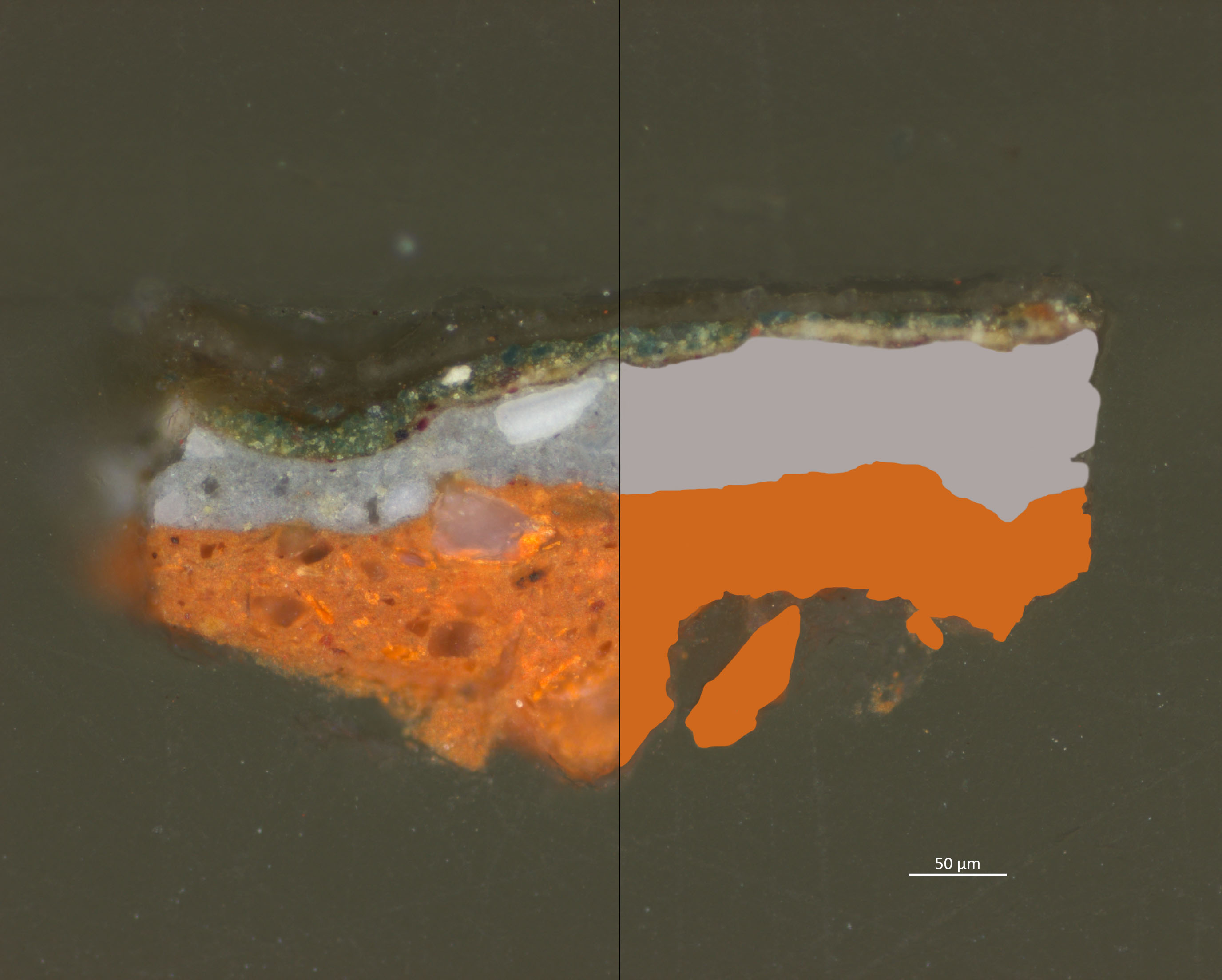
Coloured grounds were introduced to Netherlandish painting in the sixteenth century and became more and more popular through the seventeenth century. They shape painting technique, influence optical and tonal effects, and can help us understand workshop practice, chronology, and artistic mobility.
Introduction
What this database offers
The Down to the Ground database brings together published research, unpublished institutional documentation, and new technical findings on coloured grounds in Netherlandish paintings. It enables users to search for artists, places of execution, supports, dates, numbers of grounds, and standardised colour categories across a large corpus.
The database is intended both as a practical research tool and as a structured record of how coloured grounds were observed, described, and interpreted in technical art-historical research. Each entry should therefore be read alongside its cited sources and reliability rating.
Colour system
Standardised colour categories for querying the data
The DttG colour checker translates varied free-text descriptions into a consistent set of searchable colour categories. This makes it possible to compare entries produced by different researchers, institutions, and analytical methods without losing sight of the interpretive nature of colour description.
On the homepage, the checker is shown in a compact reference mode. The full documentation explains how these categories relate to original terminology and why they should be understood as standardised research categories rather than exact chromatic descriptions.
View the full colour system documentationBrown
Grey
Orange
Pink
Red
Yellow
Black
White
Quick start
How to begin using the database
Export results as CSV
Download result sets for further analysis, visualisation, and data interpretation in external tools.